

 Facebook
 X
X
 Pinterest
 Copy Link
I’ve been a homeowner for nearly two decades, long before I began working in real estate, and I often talk with people weighing the cost of renting against buying and wondering whether homeownership still makes financial sense.
So, when I see comparisons between today’s rent and mortgage payments, I understand the concern.
There’s no getting around it. Buying a home is expensive. Home prices are high, interest rates have increased borrowing costs, and in many Southern California communities, you can rent a home for considerably less each month than it would cost to buy a comparable property.
But I think that comparison misses something important.
Rent and a mortgage may both be monthly housing expenses, but what you receive in return is very different.
With Rent, You’re Paying for Housing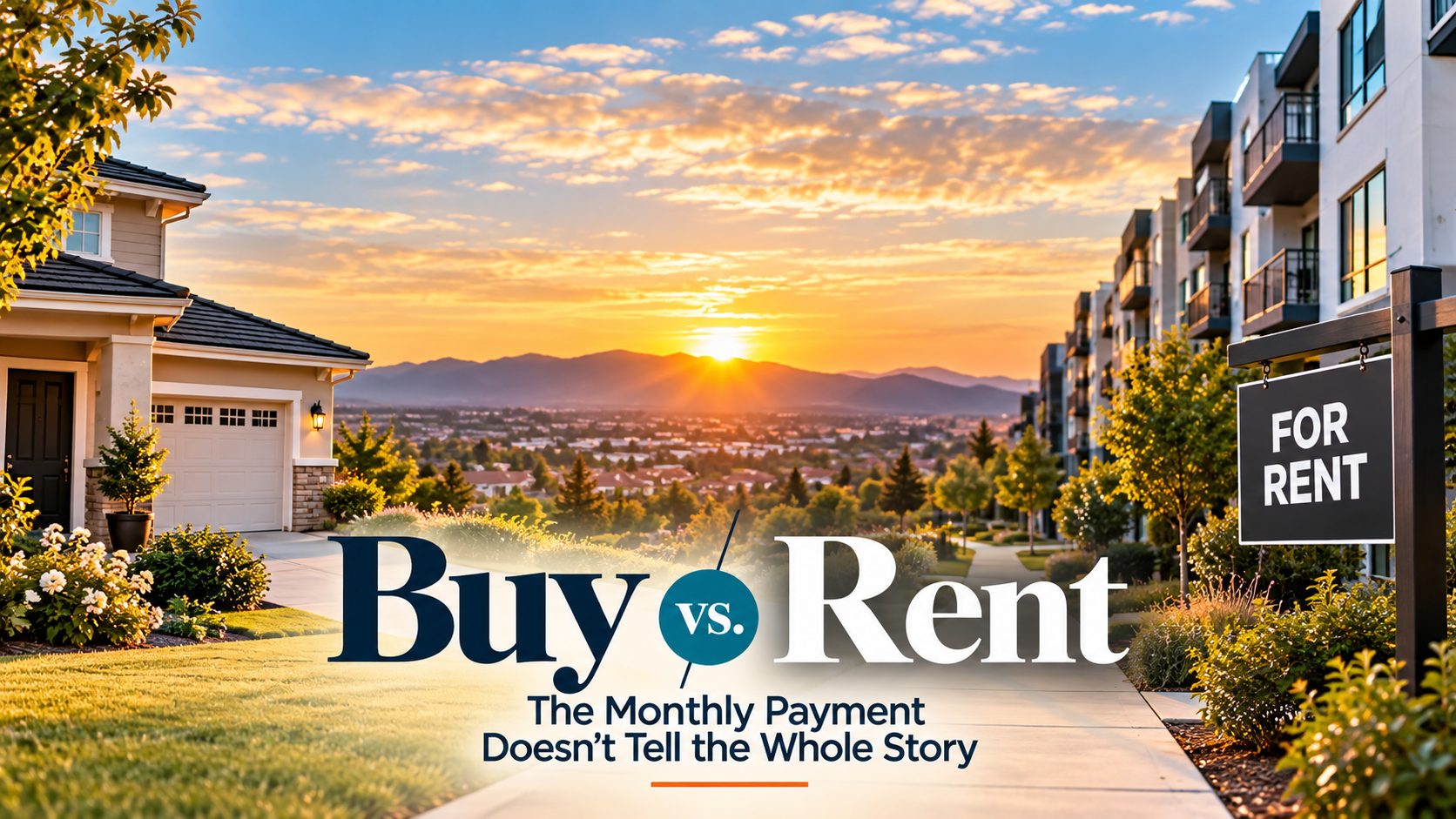
There’s value in that. You have a place to live, fewer responsibilities for repairs and maintenance, and greater flexibility if you want or need to move.
But your rent payment purchases one thing: the right to live in someone else’s property for another month.
After years of making those payments, you don’t own any portion of the property. You don’t benefit when its value increases. And when you leave, there is no accumulated equity to take with you.
That’s fundamentally different from homeownership.
A Mortgage Payment Helps Build Something You Own
Not every dollar of a mortgage payment builds equity. Interest, taxes and insurance are real expenses, just as maintenance and repairs are.
But part of your mortgage payment reduces your loan balance.
Month after month and year after year, you’re gradually increasing your ownership stake in an asset.
And there’s another component that can be considerably more powerful: appreciation.
If you buy a home and its value increases over the years, you benefit from that increase in value.
That combination of paying down the mortgage and long-term appreciation is one of the biggest differences between owning and renting.
I’ve experienced that personally as a homeowner, and I see its importance professionally in real estate.
Time Changes the Equation
This is where comparing this month’s rent with this month’s mortgage payment becomes particularly misleading.
Suppose renting saves you $1,000 a month today.
That’s meaningful. Over a year, that’s $12,000.
But what happens over ten years?
Rent is unlikely to remain unchanged for a decade. Meanwhile, a homeowner with a traditional fixed-rate mortgage has much more predictability in the principal-and-interest portion of the payment.
During those same ten years, the homeowner is also paying down the mortgage. If the property appreciates, equity can grow from two directions: a declining loan balance and an increasing property value.
That’s why I believe the better question isn’t simply, “Which one costs less this month?”
It’s, “Where will each choice leave me financially ten years from now?”
Appreciation Can Be Powerful
Consider a hypothetical $600,000 home.
At an average appreciation rate of 3% annually, it would be worth approximately $806,000 after ten years. At 4%, approximately $888,000.
Those numbers aren’t guaranteed. Real estate doesn’t appreciate in a straight line, and there will be periods when values decline.
But there’s another important factor that sometimes gets overlooked.
You don’t have to pay $600,000 in cash to own a $600,000 asset.
A buyer might purchase that home with $60,000 down, for example, while benefiting from appreciation on the value of the entire property.
That leverage is one of the characteristics that makes homeownership such a powerful long-term wealth-building tool.
And There May Be Tax Advantages
Homeownership can also provide tax benefits that aren’t available to renters.
Depending on an owner’s individual circumstances and current tax law, mortgage interest and property taxes may provide deductions that reduce the effective cost of owning.
Those benefits vary considerably from person to person, so this isn’t something I would calculate without involving a qualified tax professional.
But it belongs in the conversation.
If we’re going to compare the financial cost of renting with owning, we should compare the entire financial picture rather than two monthly payment numbers.
What About Maintenance and Repairs?
They’re part of homeownership.
Roofs eventually need replacing. Water heaters fail. Appliances break. Homeowners pay property taxes and insurance, and some properties have HOA fees and other assessments.
Those costs shouldn’t be minimized.
But here’s the distinction I think matters: you’re maintaining an asset you own.
A landlord has those expenses, too. They’re part of the economics of owning rental property and ultimately influence what tenants pay in rent (meaning, you’re paying for those expenses as part of your rent).
Renting doesn’t make the cost of maintaining housing disappear. It changes who owns the asset being maintained.
The Advantage Becomes Clearer Over Time
I wouldn’t tell someone planning to move in a year that buying a home is automatically the right decision. Transaction costs alone make time an important consideration.
Nor would I suggest someone buy a home they genuinely cannot afford simply because real estate has historically appreciated.
But for someone financially prepared to buy and planning to remain in a home for a meaningful period of time, I believe the advantages of ownership are substantial.
You’re paying for housing either way.
With one option, you’re paying for the use of someone else’s asset.
With the other, you’re paying for housing while gradually building ownership in an asset of your own, with the opportunity to benefit from appreciation and potential tax advantages along the way.
My Perspective Hasn’t Come Only From Real Estate
I sell real estate today, so it’s fair for someone to assume I’m going to favor homeownership.
But I was a homeowner long before I became a real estate professional.
Nearly two decades of owning property has given me a perspective that a rent-versus-mortgage calculator can’t completely capture. I’ve watched the relationship between what I owe and what I own change over time.
That’s why, for me, this isn’t about claiming everyone should buy a house tomorrow.
It’s about recognizing that housing isn’t merely a monthly expense. For homeowners, it can also be a long-term asset.
Renting can solve a housing need.
Homeownership can do that while also providing a path to equity, appreciation and long-term wealth.
That’s a significant difference, and it’s why I believe that for people who are financially ready and have a long enough time horizon, the benefits of buying a home far outweigh those of renting.
